
A Blowout Sheet, also known as a Degassing Cloth, is a specialized polyester fabric or high-grade parchment paper used in sublimation printing. It is placed on top of the transfer paper during the heat pressing process to capture escaping ink gases and prevent them from redepositing onto the heat platen or other areas of the substrate.
Read more
Why It Matters: Impact and Use
In the world of high-fidelity sublimation, a Blowout Sheet is a vital consumable for maintaining equipment health and product quality. It directly addresses the technical challenge of “gas management” during the sublimation phase.
- Operational Longevity: By keeping your workspace clean of ink vapors, you demonstrate higher results in your production workflow, leading to lower defect rates and higher customer satisfaction.
- Prevention of Ghosting: As sublimation ink turns into gas, it can sometimes escape from the edges of the transfer paper. If this gas is not “caught,” it can settle back onto the garment or hard substrate, creating a faint, blurry second image known as Ghosting.
- Protection of the Heat Platen: Without a blowout sheet, ink vapors can collect on the upper heating platen. Over time, this residue will “blow back” onto future projects, ruining shirts and requiring expensive cleaning or replacement of the platen’s non-stick coating.
- Moisture Management: Degassing cloths help manage the steam released from fabric during the press cycle, which is essential for ensuring a crisp, sharp transfer without “spidering” or bleeding.
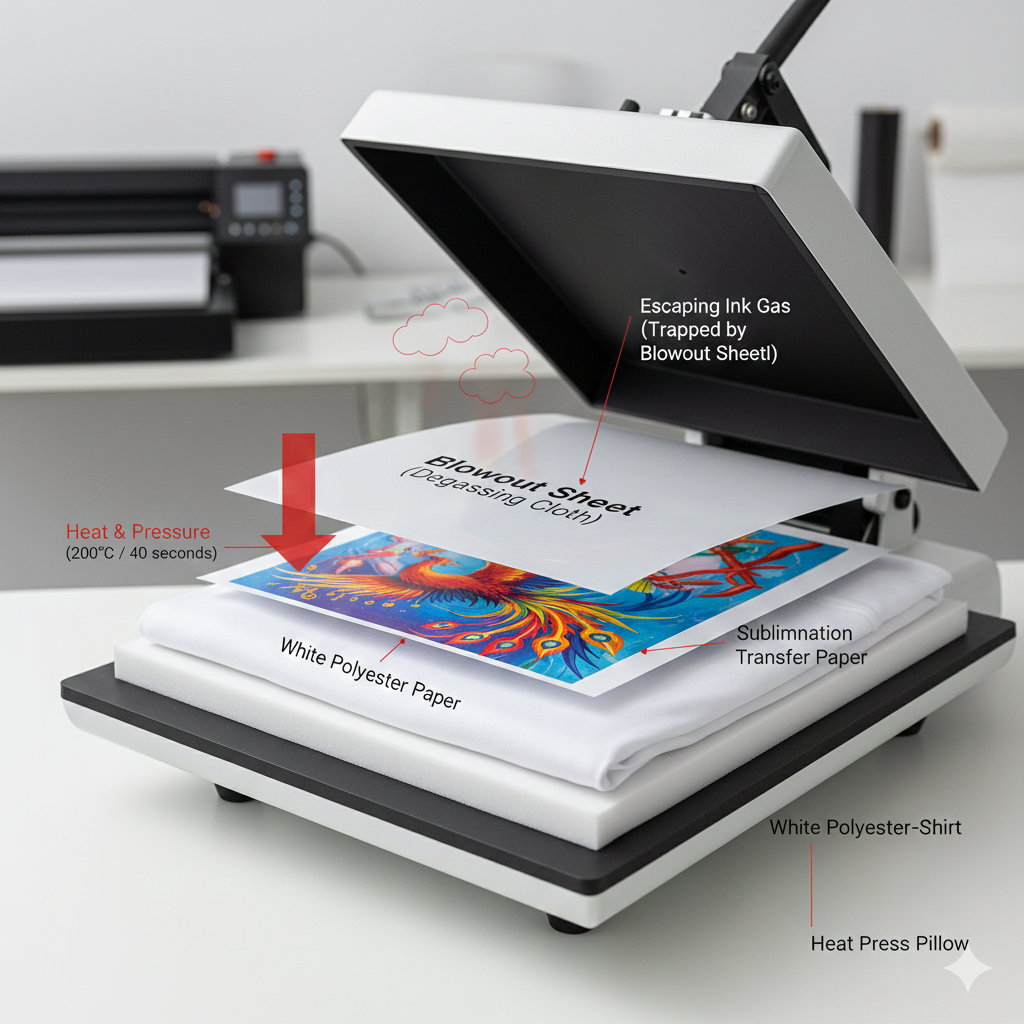
Comparison: Blowout Sheet vs. Teflon Sheet
| Feature | Blowout Sheet (Polyester/Parchment) | Teflon (PTFE) Sheet |
| Porousness | Breathable (allows gas to escape/be absorbed). | Non-porous (traps moisture and gas). |
| Usage | Disposable or limited reuse (absorbs ink). | Permanent/Reusable (wipes clean). |
| Primary Goal | Prevents ghosting and ink migration. | Prevents designs from sticking to the platen. |
Frequently Asked Questions
What is a blowout sheet used for in heat pressing?
A blowout sheet is used primarily in sublimation to absorb excess ink gas (vapors). It prevents the ink from staining the heat platen and stops ‘ghosting,’ where ink redeposits onto the garment in unwanted areas.
Can I reuse a blowout sheet?
It is generally not recommended to reuse blowout sheets if they have visible ink stains. Reusing a stained sheet can transfer ‘ghost’ ink onto your next project. Parchment paper versions are strictly single-use, while some polyester degassing cloths can be used a few times if clean.
What is the difference between a blowout sheet and a degassing cloth?
They are the same thing. Both terms refer to the protective layer used to manage gas and moisture during the sublimation transfer process.
 4.7
4.7