
CMYK stands for Cyan, Magenta, Yellow, and Key (Black). It is a subtractive color model used in color printing where these four ink colors are layered in various percentages of small dots to create a full spectrum of color. The “K” stands for “Key” because, in traditional analog printing, the black plate was the “Key Plate” used to align the other three colors and provide depth and detail.
Read more
Why It Matters: Impact and Use
For digital decorators and garment printers, mastering the CMYK color space is fundamental Misunderstanding how CMYK works compared to digital screens can lead to costly color-matching errors.
- Print-Ready Files: To achieve the best results with a T-shirt printing starter pack, designers should convert their artwork from RGB to CMYK before printing to preview how colors will shift during the physical transfer process.
- Subtractive vs. Additive Color: Unlike computer monitors which use RGB (Red, Green, Blue) light to create color, printers use CMYK. Because paper and fabric do not emit light, inks “subtract” or absorb certain wavelengths of light. This is why a design often looks brighter on a screen than it does on a printed T-shirt.
- Color Gamut Limitations: The CMYK gamut is smaller than the RGB gamut. Fluorescent or highly saturated “neon” colors seen on screen often cannot be perfectly replicated in a standard CMYK process. Professional printers must manage “Out of Gamut” warnings to ensure customer expectations are met.
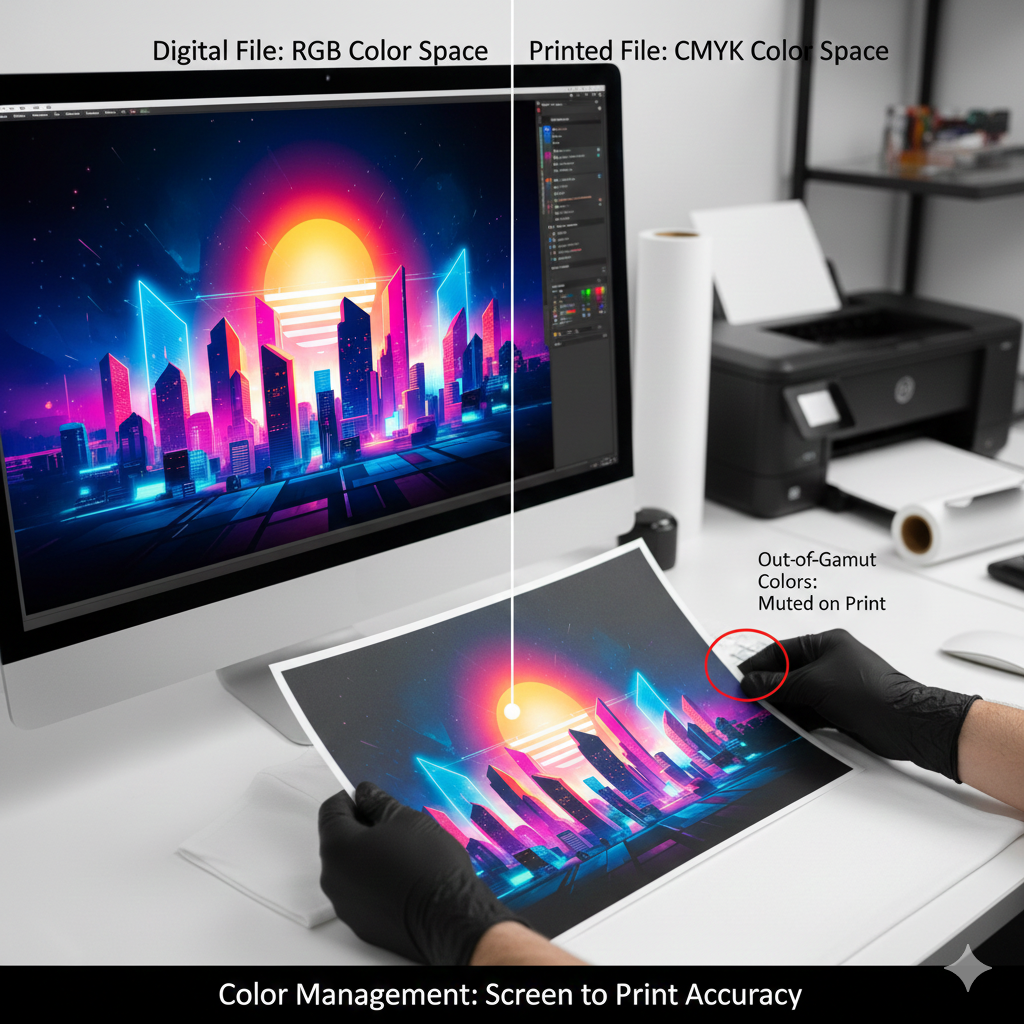
Comparison: CMYK vs. RGB
| Feature | CMYK | RGB |
| Primary Use | Physical Printing (Transfer paper, Inkjet). | Digital Displays (Screens, Mobile, TV). |
| Color Type | Subtractive (Adding ink makes it darker). | Additive (Adding light makes it whiter). |
| Primary Colors | Cyan, Magenta, Yellow, Black. | Red, Green, Blue. |
| Output Goal | Tangible accuracy on substrates. | Visual vibrancy on backlit displays. |
Frequently Asked Questions
What does the K in CMYK stand for?
The K stands for ‘Key.’ In traditional printing, the black plate was the ‘Key Plate’ used to align the other colors and provide the necessary detail and contrast to the final image.
Why do colors look different on my screen than on my printed shirt?
Screens use RGB (light-based) color, which has a wider range of bright colors. Printers use CMYK (ink-based) color, which is subtractive. Colors often lose some vibrancy when moving from a backlit screen to a physical garment.
Should I design my t-shirt graphics in RGB or CMYK?
While most modern software handles the conversion, designing in CMYK (or using CMYK preview mode) is best for print-ready artwork. This prevents ‘surprises’ when vibrant screen colors appear duller after being printed on transfer paper.
 4.7
4.7