
Laminate is a thin, transparent plastic film—typically made of polyester, vinyl, or polypropylene—applied over the surface of a printed substrate. This secondary layer acts as a permanent shield, bonded via pressure-sensitive or heat-activated adhesives, to protect the underlying ink and media from physical and environmental degradation.
Read more
Why It Matters: Impact and Use
For signage and sticker professionals, lamination is the difference between a temporary print and an industrial-grade product. Utilizing high-quality lamination is a hallmark of E-E-A-T (Expertise, Authoritativeness, and Trustworthiness), as it ensures the longevity of the work in real-world conditions.
- Water & Weatherproofing: While Eco-Solvent or UV-curable inks are water-resistant, lamination seals the edges and surface of the media, preventing moisture from seeping into the vinyl or paper fibers, which can cause delamination or “silvering.”
- UV Protection & Color Permanence: Sunlight contains ultraviolet (UV) radiation that breaks down ink molecules (photo-oxidation). A UV-rated laminate contains inhibitors that absorb these rays, preventing the “fading” commonly seen on outdoor stickers and vehicle wraps.
- Mechanical Durability: Laminate provides a sacrificial layer that guards against scratches, abrasions, and chemicals. This is essential for floor graphics, heavy-duty equipment labels, or stickers applied to frequently handled items like laptops or water bottles.
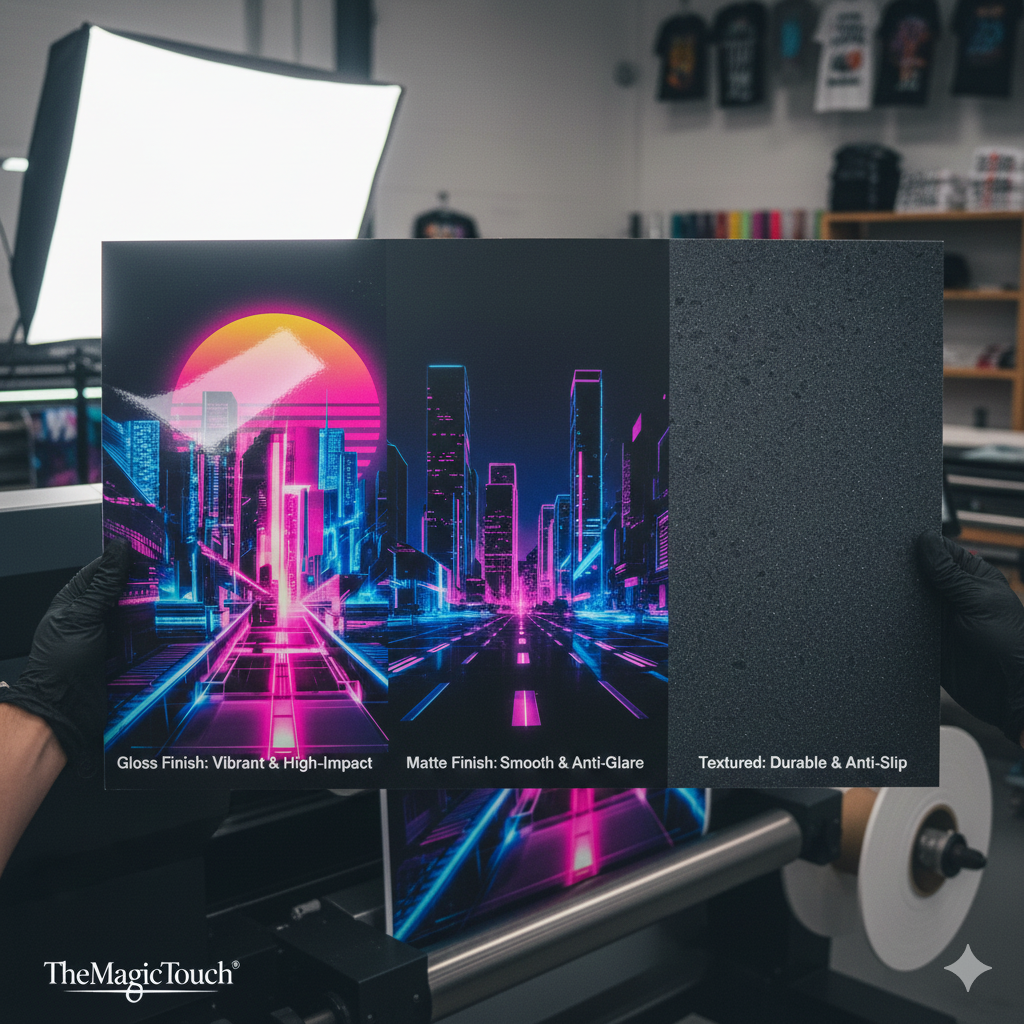
- Aesthetic Enhancement: Laminates are available in various finishes, including Gloss (for vibrant, high-contrast colors), Matte (to reduce glare and provide a sophisticated look), and Satin or Sand-textured (often used for slip-resistance on floor decals).
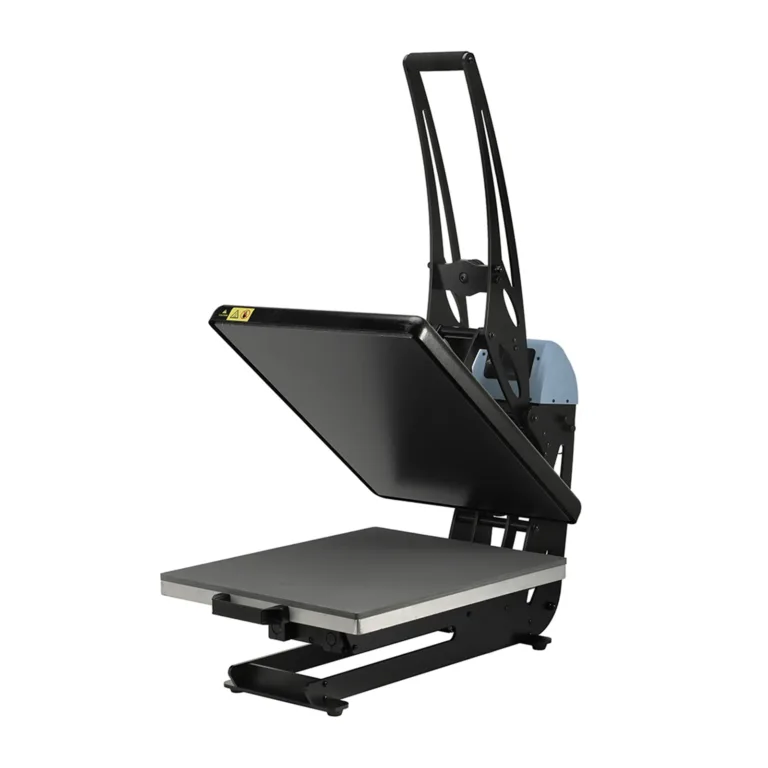
All clamshell Heat Presses
Comparison: Lamination Types
| Type | Application Method | Best Use Case | Benefit |
| Cold Laminate | Pressure-sensitive (Rollers) | Vehicle wraps, outdoor vinyl. | No heat required; preserves vinyl stretch. |
| Hot Laminate | Heat-activated (Encapsulation) | ID cards, menus, posters. | Provides a rigid, ultra-durable seal. |
| Liquid Laminate | Spray or Clear-coat | Large banners, canvas prints. | Cost-effective for uneven or flexible surfaces. |
Frequently Asked Questions
Do Eco-Solvent prints always need to be laminated?
While Eco-Solvent ink is durable for 2-3 years outdoors on its own, lamination is highly recommended for any print subject to high friction (like floor stickers) or intense direct sunlight to extend the life to 5+ years.
What is ‘silvering’ in lamination?
Silvering refers to tiny air bubbles trapped between the laminate and the print, giving it a cloudy or ‘silvery’ appearance. This is usually caused by insufficient roller pressure or applying the laminate too soon after printing before the ink has fully ‘outgassed’.
Can I laminate over standard inkjet paper?
Yes, but you should use a thermal (hot) laminate for paper. Cold lamination can sometimes pull the fibers of the paper apart if it needs to be repositioned, whereas hot lamination creates a rigid, protective ‘pocket’.
 4.7
4.7