
A Manual Heat Press is a garment decoration machine that requires the physical force of an operator to close the heating platen and generate the pressure needed for transfer application. Unlike pneumatic (air-powered) or electric presses, a manual press uses a mechanical lever and linkage system to lock the upper heat plate onto the lower base.
Read more
Why It Matters: Impact and Use
Manual heat presses are the most common entry point for custom apparel businesses. Understanding the mechanics of a manual system is vital for establishing E-E-A-T (Expertise, Authoritativeness, and Trustworthiness), as it requires the operator to develop a “feel” for pressure and timing that automated machines handle electronically.
- The “Feel” Factor: Because there is no digital pressure gauge on most manual units, operators must learn to calibrate pressure based on the resistance felt when locking the handle—a skill essential for consistent wash-fastness.
- Two Primary Configurations:
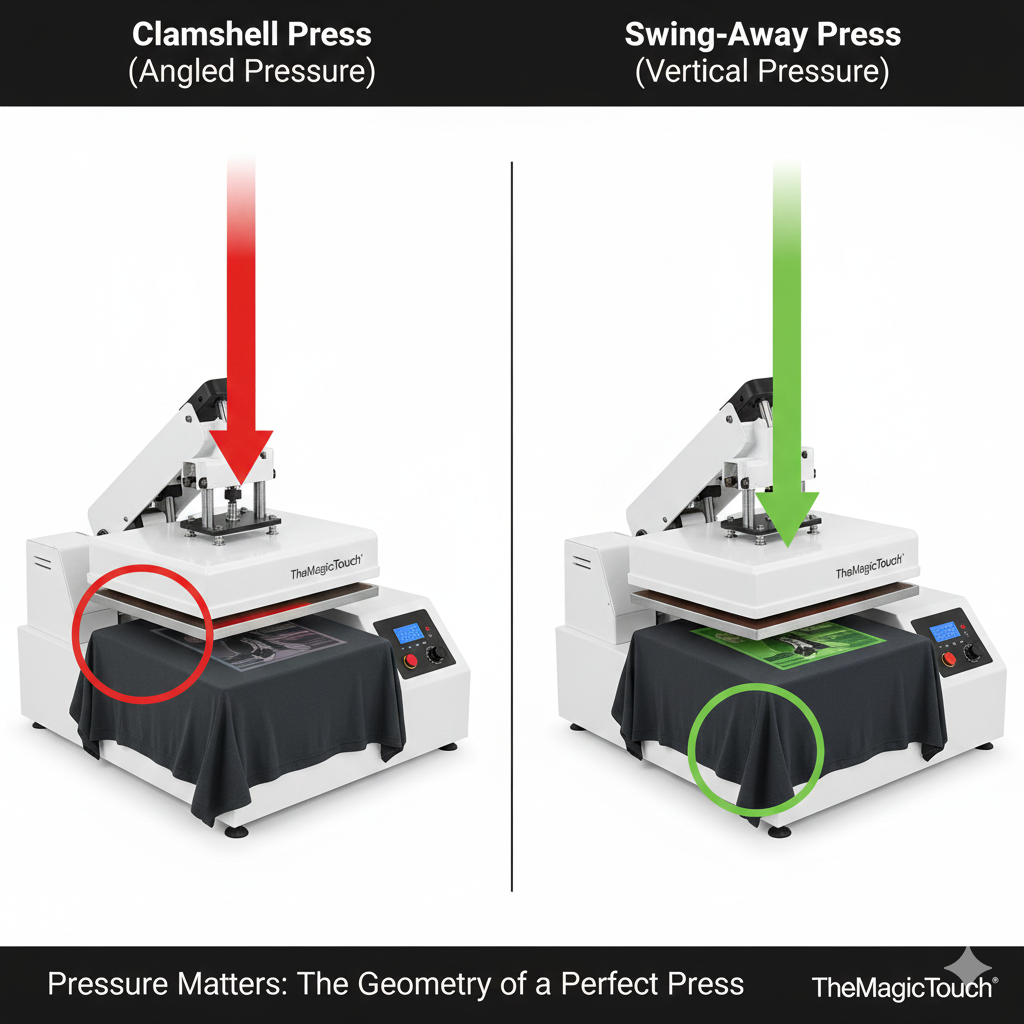
- Clamshell: Opens like a book or a clam. These are compact, space-saving, and ideal for flat items like T-shirts and tote bags.
- Swing-Away: The upper platen lifts straight up and then swings horizontally to the side. This provides a clear, heat-free workspace and typically allows for Higher Pressure and more even distribution because the force is applied vertically rather than at an angle.
- Two Primary Configurations:
- Control and Versatility: While manual, most professional models (like the TheMagicTouch HTP series) still feature digital controllers for precise temperature and time management. The operator is responsible for adjusting the pressure knob to reach the desired Low, Medium, or High pressure level.
- Cost-Effectiveness: Manual presses are significantly more affordable than pneumatic systems because they do not require an air compressor or complex electrical actuators. This makes them the go-to choice for startups and low-to-medium volume production.
All clamshell Heat Presses
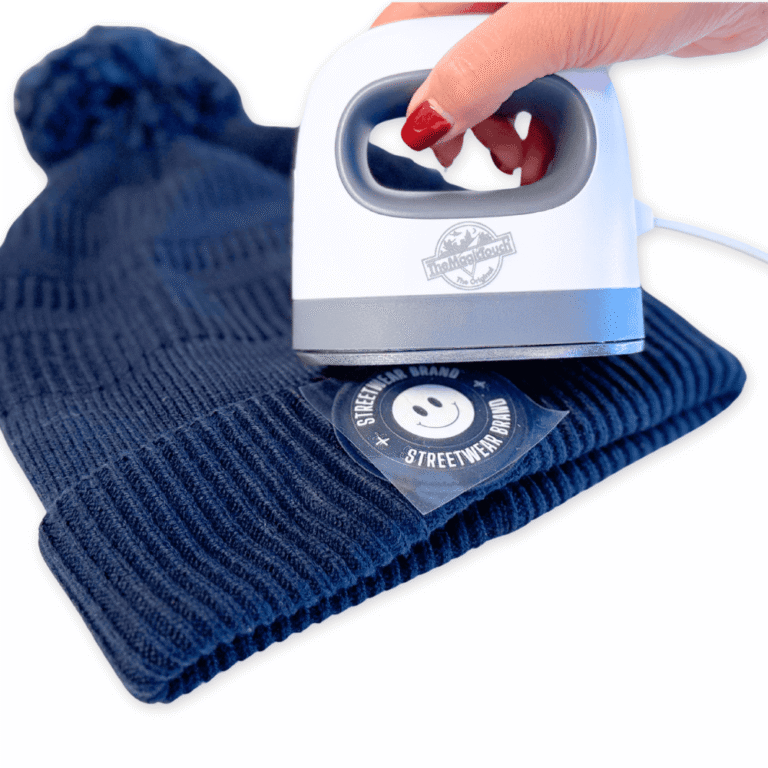
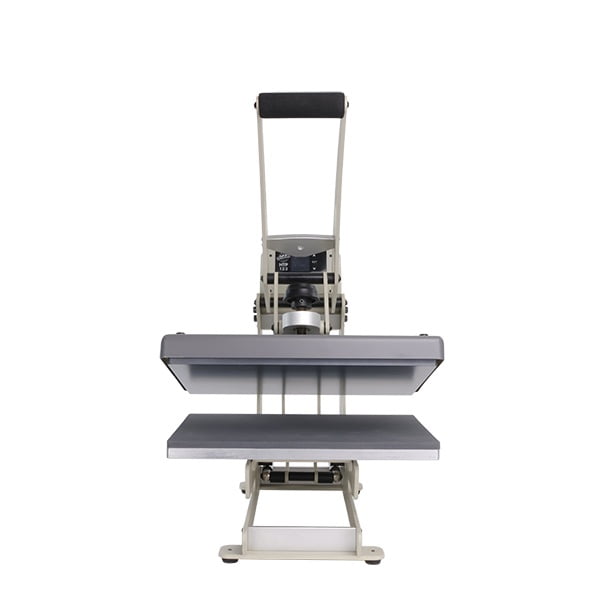
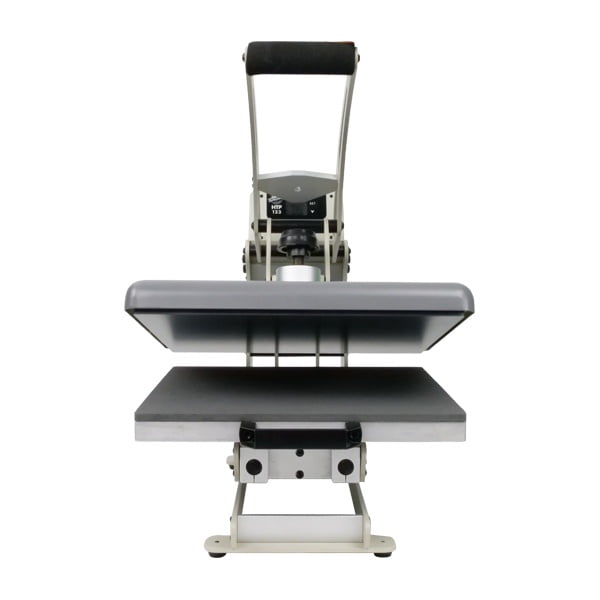
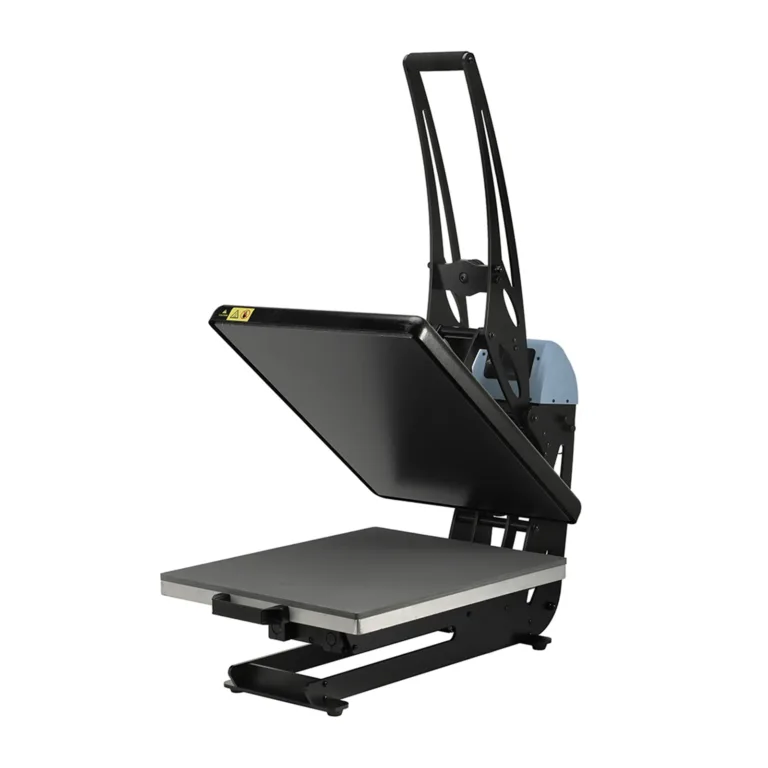
How It Works: The 3 Primary Mechanisms
| Feature | Clamshell Press | Swing-Away Press |
| Space Required | Minimal; fits on small counters. | Larger; needs room to swing right/left. |
| Pressure Consistency | Good for thin items. | Superior; applies pressure straight down. |
| Ease of Use | Fast “open-and-shut” workflow. | Slower, but safer (platen moves away). |
| Best For | T-shirts, hoodies, flat vinyl. | Thick items, tiles, high-pressure transfers. |
Frequently Asked Questions
Is a manual heat press better than an automatic one?
It depends on volume. Manual presses are more affordable and easier to maintain. Automatic (pneumatic) presses are better for high-volume shops because they reduce operator fatigue and provide exact, repeatable pressure settings via a digital gauge.
How do I adjust the pressure on a manual heat press?
Most manual presses have a central pressure adjustment knob. Turning it clockwise lowers the heating platen (increasing pressure), while counter-clockwise raises it (decreasing pressure). You should always test the pressure with a sample garment before starting production.
Can I do ‘No-Weed’ laser transfers on a manual press?
Yes, but you usually need a ‘Swing-Away’ manual press. These designs often require very high pressure and even heat distribution, which the straight-down motion of a swing-away press provides more effectively than a clamshell.
 4.7
4.7