
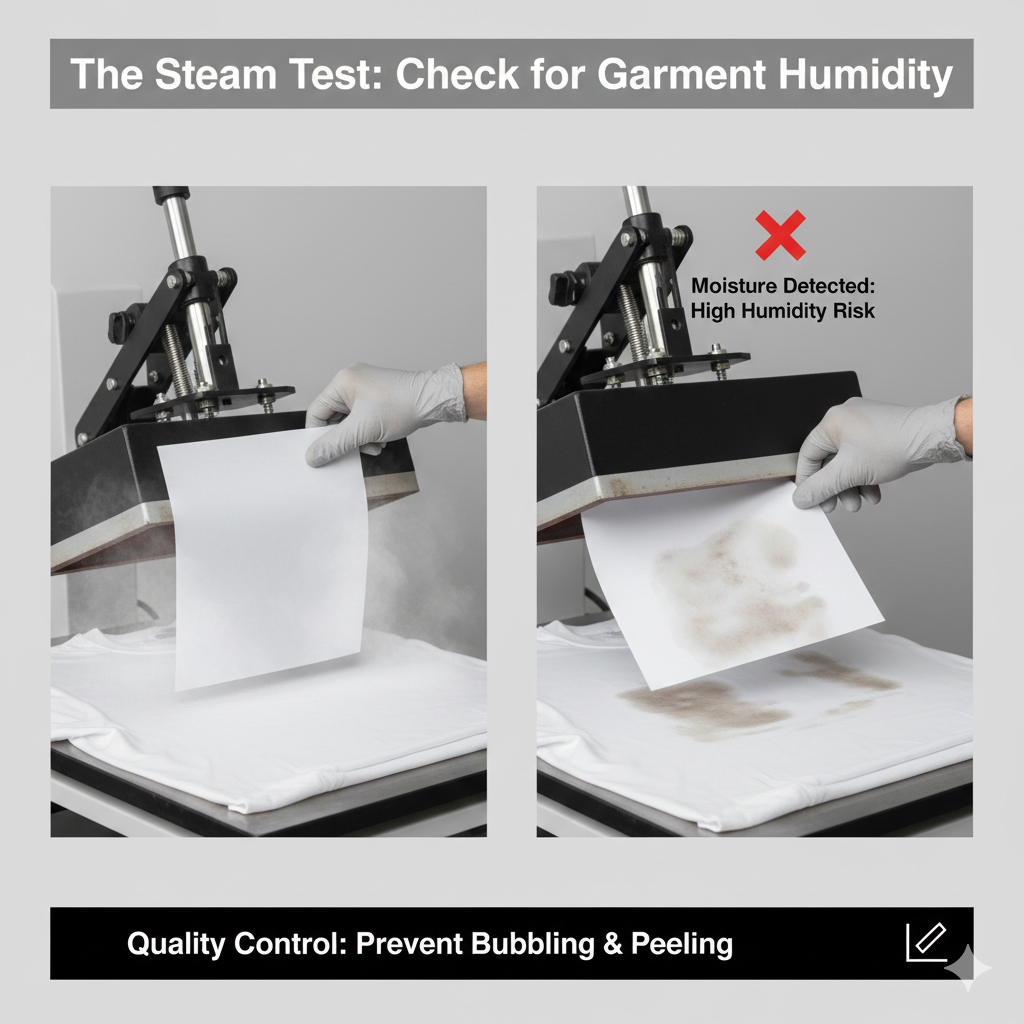
Pre-pressing is the process of applying heat and pressure to a substrate (such as a T-shirt, hoodie, or tote bag) for a short duration (typically 3–5 seconds) before applying the actual transfer. This preparatory step is designed to flatten the surface and, most importantly, eliminate residual moisture and wrinkles from the fabric.
Read more
Why It Matters: Impact and Use
In the professional garment decoration industry, skipping the pre-press is one of the leading causes of transfer failure. Incorporating this step into your workflow is a hallmark of E-E-A-T (Expertise, Authoritativeness, and Trustworthiness), as it ensures a high-quality, long-lasting bond.
- Precision Placement: A pre-pressed, flat garment makes it significantly easier to align the transfer accurately. Wrinkles can cause the transfer to shift slightly when the press is closed, leading to crooked designs.
- Moisture Removal: Natural fibers like cotton are hydrophilic, meaning they naturally absorb moisture from the air. If you apply a transfer to a “damp” garment, that moisture turns into steam during the pressing cycle. This steam creates pressure between the fabric and the adhesive, resulting in bubbles, poor adhesion, or the transfer peeling off after the first wash.
- Flattening the Weave: Pre-pressing removes wrinkles and flattens the fabric’s “fuzz” (fibers). This creates a smoother surface, allowing the adhesive to bond more uniformly with the weave.
- The Polyester Exception (Dye Migration): While essential for cotton, pre-pressing polyester requires caution. Polyester is hydrophobic and rarely holds enough moisture to affect adhesion. Over-heating polyester—including unnecessary pre-pressing—can trigger Dye Migration (bleeding), where the fabric’s dye turns into a gas and discolors the transfer.
Comparison: Pre-Pressing by Fabric Type
| Fabric Type | Recommended? | Duration | Primary Reason |
| 100% Cotton | Yes (Crucial) | 3–5 Seconds | Remove moisture & wrinkles. |
| Polycotton Blend | Yes | 2–3 Seconds | Balance moisture removal vs. heat sensitivity. |
| 100% Polyester | Optional | 1–2 Seconds | Only if wrinkles are severe; avoid dye migration. |
| Nylon | Yes | 2 Seconds | Remove “trapped” air/moisture to prevent bubbling. |
Frequently Asked Questions
How long should I pre-press a T-shirt?
For standard cotton garments, a pre-press of 3 to 5 seconds at the application temperature of your transfer is sufficient to remove moisture and wrinkles.
What happens if I don’t pre-press cotton?
Failing to pre-press cotton often leads to ‘bubbling’ or poor adhesion. The hidden moisture in the fibers turns into steam during the press, which pushes the transfer away from the fabric before the glue can set.
Why is pre-pressing risky for polyester?
Polyester is sensitive to heat. Unnecessary pre-pressing can lead to ‘heat marks’ (scorching) or cause the dye in the fabric to bleed into your design, a phenomenon known as dye migration.
 4.7
4.7