
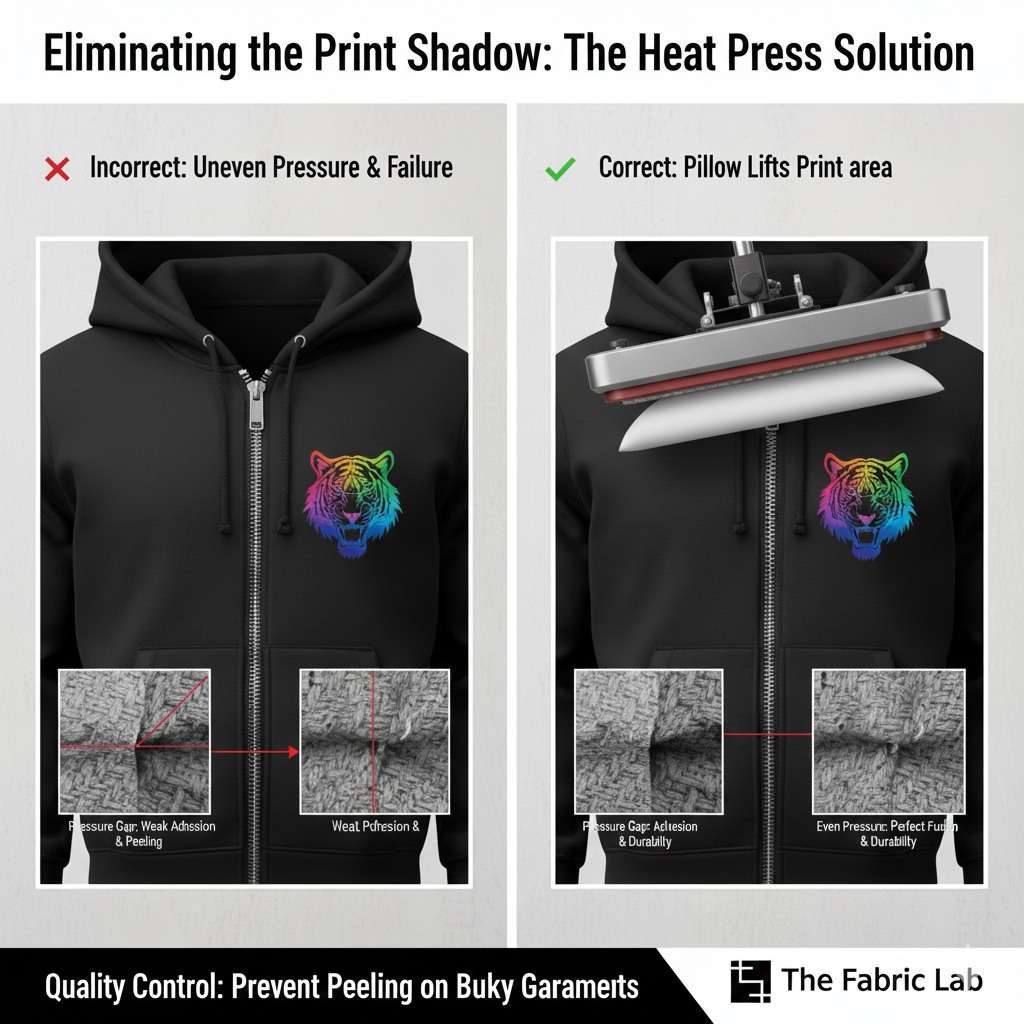
A Print Shadow (also known as a “pressure gap”) occurs during the heat transfer process when an obstruction, such as a thick seam, collar, button, or zipper, prevents the heat platen from making full, even contact with the lower-lying fabric adjacent to it. Because the raised area absorbs the majority of the machine’s pressure, the “shadowed” area receives insufficient force, leading to failed adhesion or incomplete transfers.
Read more
Why It Matters: Impact and Use
In the garment decoration industry, print shadows are a leading cause of “preventable” quality issues. Mastering the techniques to eliminate shadows is a hallmark of E-E-A-T (Expertise, Authoritativeness, and Trustworthiness), ensuring that complex items like hoodies and polo shirts are as durable as flat t-shirts.
- Platen Threading: Using a heat press with a “threadable” lower platen allows you to slide the garment over the base, keeping the top layer (where the print goes) flat while the bulky seams or buttons are tucked underneath, effectively eliminating the shadow.
- Adhesion Failure: Heat transfer adhesives (for DTF, Vinyl, or Paper) require a specific combination of heat, time, and Pressure. If a print shadow exists, the adhesive never “bites” into the fabric fibers, causing the design to peel off after the first wash.
- Inconsistent Color (Sublimation): In dye sublimation, a print shadow prevents the gas from being forced into the polyester fibers. This results in “ghosting” or faded patches near seams, ruining the professional look of the garment.
- The “Build-Up” Solution: To fix a print shadow, professionals use Heat Press Pillows or Print Foam Pads. By placing a smaller pad inside or under the garment in the “shadowed” area, you raise that specific section above the level of the collar or seam, ensuring the platen strikes the transfer first.
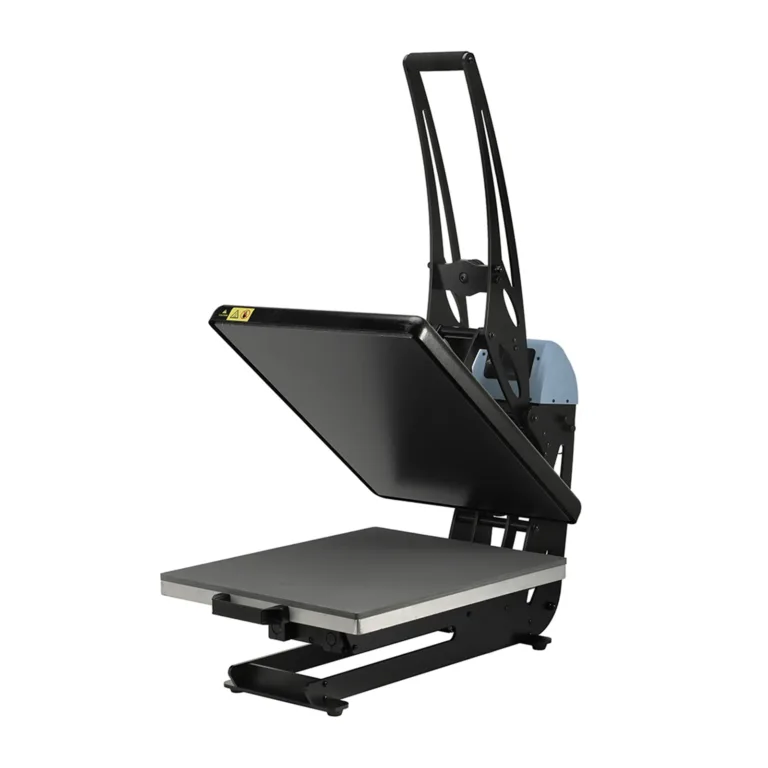
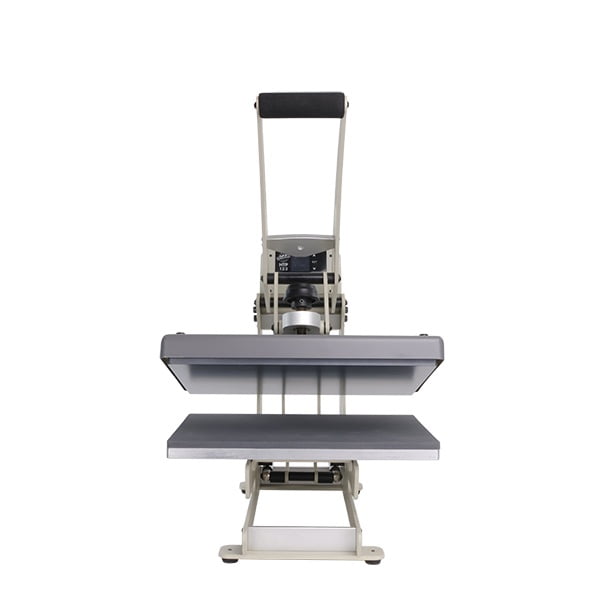
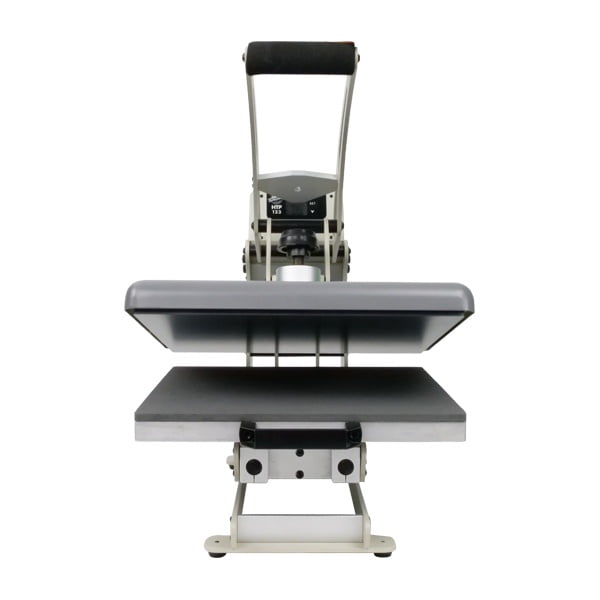
All clamshell Heat Presses
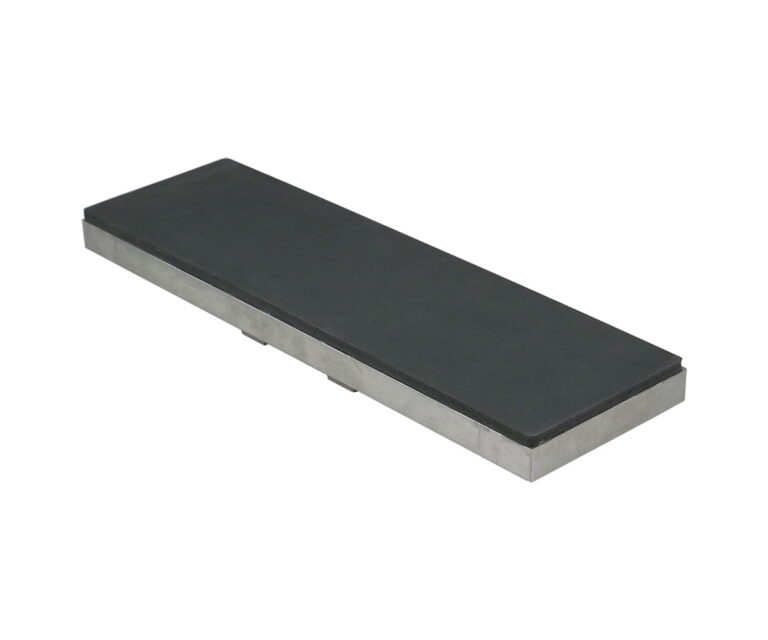
Techniques to Eliminate Print Shadows
| Equipment | How it Works | Best For |
| Heat Press Pillows | Foam inserts that allow seams to sink in while pushing the print area up. | Hoodies with zippers, polo collars. |
| Teflon Pillows | Provides a slick surface and internal “lift” for even pressure. | Bags, jerseys with thick piping. |
| Interchangeable Platens | Using a smaller 15x15cm platen to print only the “open” area. | Chest logos, sleeve prints. |
| Platen Wrapping | Threading the garment so only one layer of fabric is on the press. | Buttons, bulky back-seams. |
Frequently Asked Questions
How can I tell if I have a print shadow?
The easiest way is the ‘Paper Test.’ Place a strip of paper in the area you intend to print and close the press. If you can easily pull the paper out while the press is locked, you have a print shadow and lack the pressure needed for a successful transfer.
Can I just increase the pressure to fix a print shadow?
No. Increasing the overall pressure will only put more stress on the obstruction (like the collar), which could damage the heat press or scorch the seam. You must use a pillow or pad to elevate the specific printing area instead.
Does a print shadow affect DTF transfers?
Yes, significantly. DTF adhesive requires firm, even pressure to bond with the textile. A print shadow will cause the DTF ink to sit loosely on the surface, leading to immediate cracking or peeling when the garment is stretched.
 4.7
4.7