4.7/5.0

    customer ratings

  • Register
  • Support
  • Contact
  • English (United States)
  • Customers give us a rating of 4.6/5
  • Competitive pricing
  • Largest Product Range
  • Own brands

Printing techniques

When choosing the right printing techniques, it is important to consider factors such as the intended use of the product, the desired level of quality, the circulation and the budget. We are happy to help you find the best printing techniques for your needs. Knowing various printing techniques can enhance your product’s quality.

Choose your printing technique

Printing Technique Transfer Paper

Transfer Paper

With transfer paper you can easily print photos, texts and designs on the most versatile (blank) products and surfaces.

How transfer paper works

  1. Print the image: Print the image on transfer paper.
  2. Position the transfer: Place the transfer paper on the (blank) product or textile.
  3. Place and press: Use a Heat Press to transfer the toner (image)

The benefits of transfer paper

  • Versatile: Print textiles, mugs, candles, wood, and even temporary tattoos!
  • Simple: For copy shops, printers, T-shirt companies or at the office or at home.
  • Powerful colours: Thanks to laser and/or LED printers.

Transfer paper is ideal if you want low maintenance and want to print versatility on many different materials and surfaces.

Read more

Heat Transfer Vinyl

Heat Transfer Vinyl is a textile foil that is applied to textiles with heat. It is perfectly suited for making personal T-shirts, sportswear and workwear.

How flex foil works

  1. Design & cut: Cut the flex foil mirrored with a cutting plotter.
  2. Excess foil: Peel the excess foil from the carrier.
  3. Positioning: Position the carrier with the foil on the textile.
  4. Press: Use a transfer press to press the foil into the textile.
  • Durable: Wash-resistant and colourfast.
  • Versatile: For all kinds of textiles.
  • Creative: Design your own clothing.

Flex foil is perfect for the real hobbyist who wants to be creative and also has the necessary time available for this.

Read more
Printing Technique Heat Transfer Vinyl
Printing Technique Vinyl

Vinyl

Vinyl foil is a self-adhesive foil that you can cut and then stick on all kinds of surfaces and substrates.

How vinyl foil works

  1. Design & cut: Cut the vinyl film with a cutting plotter.
  2. Excess film: Peel the excess film from the backing.
  3. Apply: Transfer the vinyl film with the backing onto the application tape.
  4. Positioning: Position the vinyl film with the application tape.
  5. Apply: Touch the vinyl film well and remove the application tape.

The advantages of vinyl film

  • Versatile: For indoor and outdoor use.
  • Durable: Weatherproof and long-lasting.
  • Creative: Design your own stickers, lettering and more.

Vinyl film is perfect for sign companies that (letter) providing advertising messages for companies.

Read more

Understanding different printing techniques allows you to select the right approach for your specific projects.

Sublimation

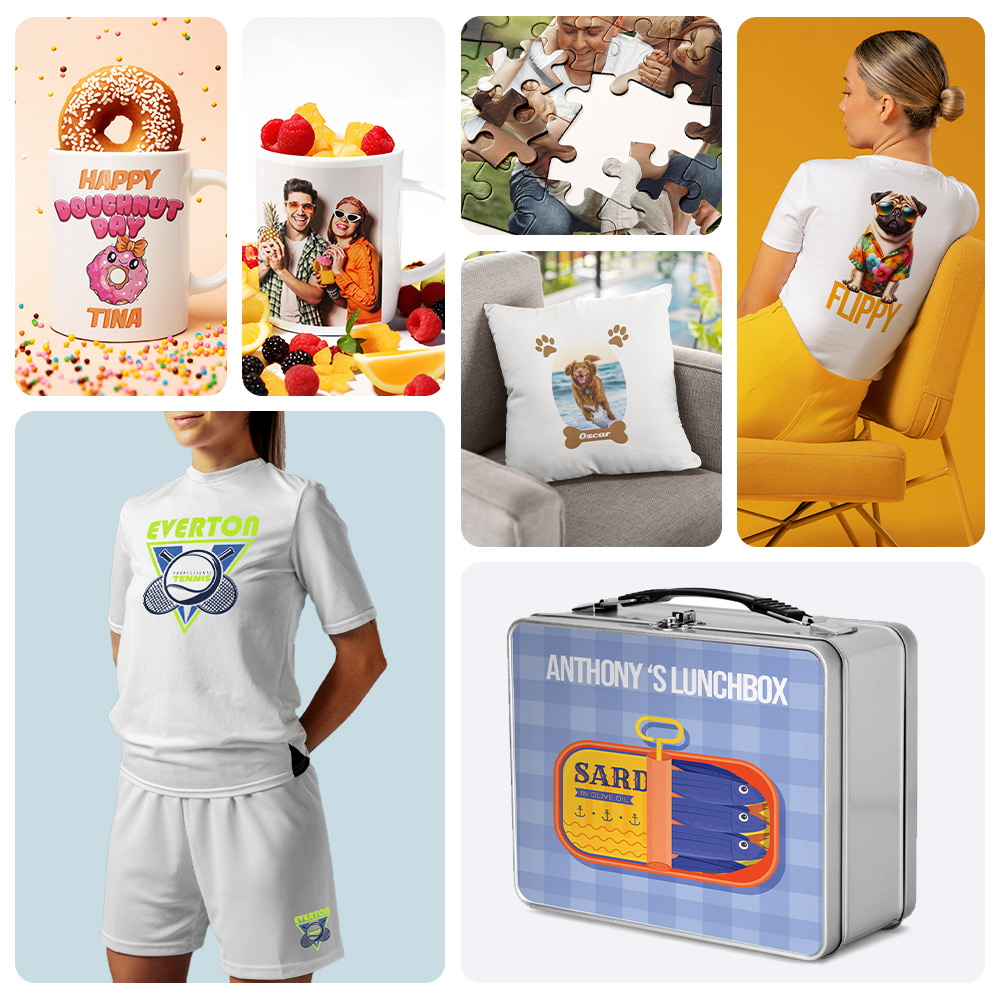
Sublimation is a special printing technique in which ink is absorbed directly into the material under the influence of heat.

How sublimation works

  1. Print: Print the design on the sublimation paper.
  2. Sublimation article: Use a product with a polyester coating.
  3. Press: Press the ink (image) into the product at a high temperature.

The advantages of sublimation

  • High quality: Vivid colors and sharp details.
  • Durable: The print does not wear out or fade.
  • Versatile: For mugs, apparel and more.

Sublimation provides eye-catching, full-color prints on polyester-coated, white products with easy-to-use design software.

Read more
Printing Technique Sublimation
Printing Technique TEco Solvent

Eco Solvent

Eco solvent is a printer with environmentally friendly (solvent) inks for printing banners, posters, stickers and more.

How Eco Solvent works

  1. Design & print: Print the design on special paper or foil with eco-solvent inks.
  2. Print & Cutting: Print the design, and it is precisely cut out (if necessary).
  3. Application: The print is applied to application tape and applied to the desired surface.

Benefits of Eco solvent

  • Sustainable: Less harmful to the environment.
  • High quality: Vivid colors and sharp details.
  • Versatile: For indoor and outdoor applications.

With Eco solvent you can print on textile transfers as printable media for both indoor and outdoor use, making Eco solvent a very versatile printing system.

Read more

Direct to Film

Direct to Film is an innovative printing technique where designs are printed directly onto a special film and then transferred to textiles.

How Direct to Film works

  1. Design & print: Your design is printed onto a DTF film.
  2. Powder & press: The print must be provided with a special powder.
  3. Baked: The transfer and the powder must be heated
  4. Press: The transfer is then pressed onto the textile.

Advantages of Direct to Film

  • Versatile: For all types of textiles.
  • High quality: Vivid colours and sharp details.
  • Efficient: Fast and easy process.
Read more
Printing Technique Direct to Film

Comparisons with other printing systems

Printing Technique

Flex foil

Investment: From € 199,-

  • Cutting technique: Cutting plotter
  • Type of foil: Flex foil or vinyl foil
  • Maintenance: No
  • Shelf life: Depends on type
  • Application: Textiles & fabrics.
  • Advantage: Low investment
  • Disadvantage: Labor-intensive.
Printing Technique Vinyl

Vinyl foil

Investment: From € 199,-

  • Cutting technique: Cutting plotter
  • Type of foil: Vinyl foil
  • Maintenance: No
  • Shelf life: Depending on the type
  • Application: advertising cars, walls, partitions.
  • Advantage: Very low investment
  • Disadvantage: Labor-intensive
Printing Technique Sublimation

Sublimation

Investment: From € 499,-

  • Printing technology: Inkjet
  • Ink type: (sublimation) Ink
  • Cartridge type: CMYK
  • Transfer media: Sublimation paper
  • Maintenance: No
  • Shelf life: 1 year
  • Application: Textiles, fabrics and products
  • Advantage: High-gloss result
  • Disadvantage: Polyester base.
Printing Technique Transfer Paper

Transfer paper

Investment: From € 499,-

  • Print technology: Laser
  • Ink type: Toner
  • Cartridge type: CMYK or CMY+W
  • Transfer media: Transfer paper
  • Maintenance: Depending on the transfer
  • Shelf life: infinite
  • Application: Textiles, fabrics, wood, ceramics, sheet material, aluminium, magnetic foil, PU leather, leather, canvas, acrylic, glass, candles etc.
  • Advantage: Very versatile
  • Disadvantage: Various instructions for use
Printing Technique Eco Solvent

Eco solvent

Investment: From € 4.499,-

  • Printing technology: Inkjet
  • Ink type: (ecosolvent) Ink
  • Cartridge type: CMYK + CMYK+W
  • Transfer media: Printable flex, vinyl, paper
  • Maintenance: Yes
  • Shelf life: 1 year
  • Application: Textile, Banners, Self-adhesive Vinyl
  • Advantage: High quality
  • Disadvantage: not detailed freestanding designs
Printing Technique Direct to Film

Direct to Film

Investment: From € 9.995,-

  • Printing technique: Inkjet
  • Type of ink: (DTF) Ink
  • Media: DTF films
  • Maintenance: Yes
  • Shelf life: 6 months to 1 year
  • Application: Textiles & Fabrics
  • Advantage: Low cost per print
  • Disadvantage: Daily volume, maintenance and technical knowledge required.

Understanding different printing techniques can greatly enhance your project outcomes.

Heat Transfer Vinyl is one of the popular printing techniques used for custom apparel and fabric designs.

Vinyl is another versatile option among the various printing techniques that allows for intricate designs and lettering.

Sublimation printing techniques are ideal for vibrant, full-color images on suitable substrates.

Eco Solvent is among the sustainable printing techniques that provide excellent results for both indoor and outdoor applications.

Direct to Film is an innovative method among modern printing techniques that simplifies the transfer process.

Transfer paper is a traditional method in the category of printing techniques that has stood the test of time.

Choosing the right printing technique ensures that your final product meets your expectations and requirements.

Vinyl printing techniques offer flexibility and creativity in designing custom stickers and signs.

Each of these printing techniques serves unique purposes and is chosen based on specific project needs.

Understanding these printing techniques can help you make informed decisions and achieve desired outcomes.

Consider the advantages of each type of printing technique as you plan your projects.

Many factors influence the choice of printing techniques, including material compatibility and design requirements.

Always evaluate the printing techniques you are considering to find the best match for your needs.

Your choice of printing techniques should align with your project goals and budget constraints.

Researching various printing techniques can provide inspiration for your next creative endeavor.

The effectiveness of your projects relies heavily on the right printing techniques being employed.

As you explore different printing techniques, consider how they can elevate the quality of your work.

Choose printing techniques that allow you to express your creativity while maintaining quality.

For the best results, familiarize yourself with various printing techniques that suit your applications.

Ultimately, selecting the right printing techniques can make all the difference in your final product quality.

Each printing technique has its own unique benefits, so be sure to assess them carefully.

Explore the vast landscape of printing techniques to find what best fits your needs.

Select a Pickup Point