
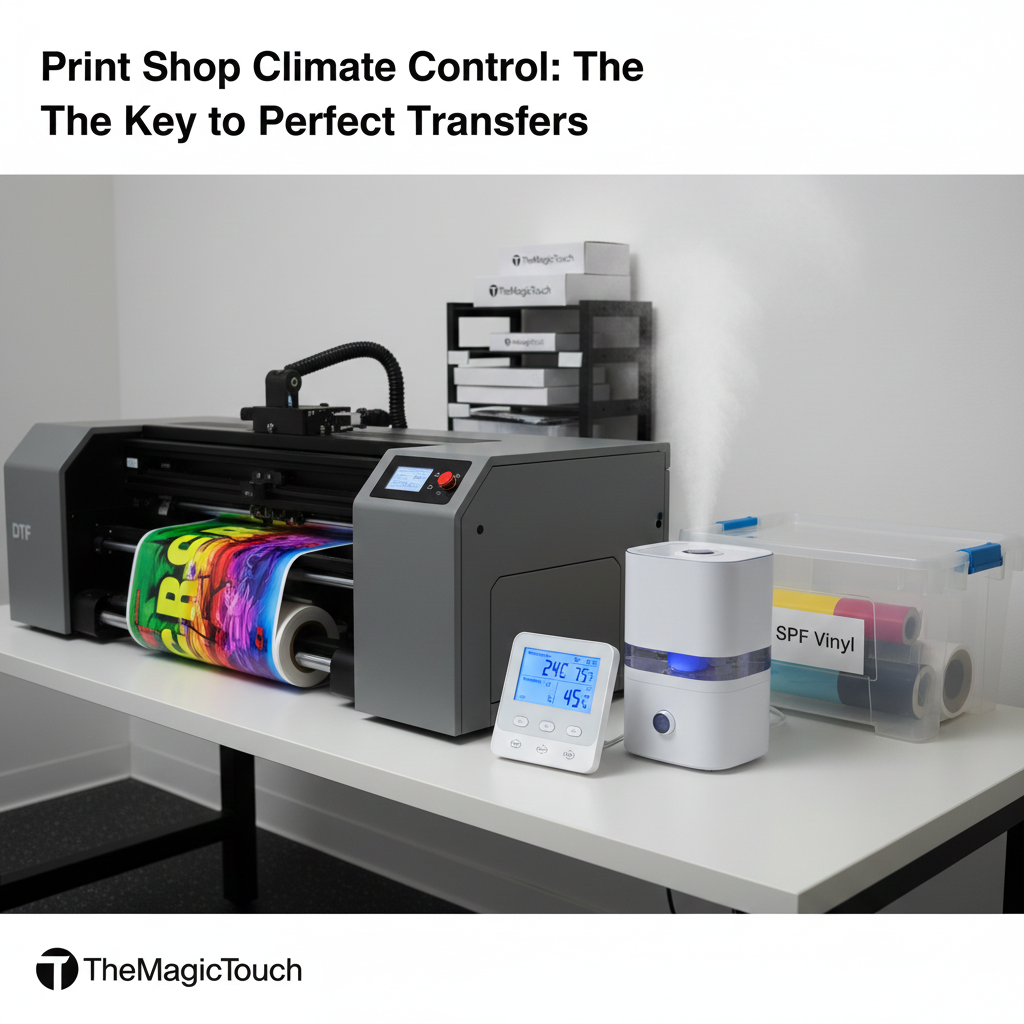
Environmental Factors refer to the ambient temperature and relative humidity levels within the space where digital printing equipment and transfer media are operated or stored. In the transfer industry, maintaining a specific “climate window” is essential to ensure that chemical coatings, inks, and adhesives perform according to manufacturer specifications.
Read more
Why It Matters: Impact and Use
In professional garment decoration, controlling environmental factors is a critical technical component and neglecting the workshop climate can lead to intermittent hardware failures and inconsistent print quality that are difficult to troubleshoot.
- Static Management: In dry environments (below 20% humidity), static buildup on PET films or vinyl can attract dust and hair, or cause the cutting plotter to malfunction, leading to ruined designs.
- Media Stability: Transfer papers and films are highly hygroscopic, meaning they absorb moisture from the air. High humidity can cause “cockling” (rippling of the paper), leading to print head strikes, while low humidity can cause excessive static electricity, leading to “overspray” or ink misting.
- Ink Chemistry & Clogging: Direct to Film (DTF) and DTG inks are sensitive to temperature. If the room is too cold, the viscosity of the ink increases, leading to “starving” of the print head and clogged nozzles. Conversely, extreme heat can cause ink to dry prematurely inside the head.
- Adhesive Performance: For processes involving powders (like DTF), high humidity can cause the adhesive powder to clump or “pre-cure” on the film, resulting in a grainy finish or poor wash-fastness.
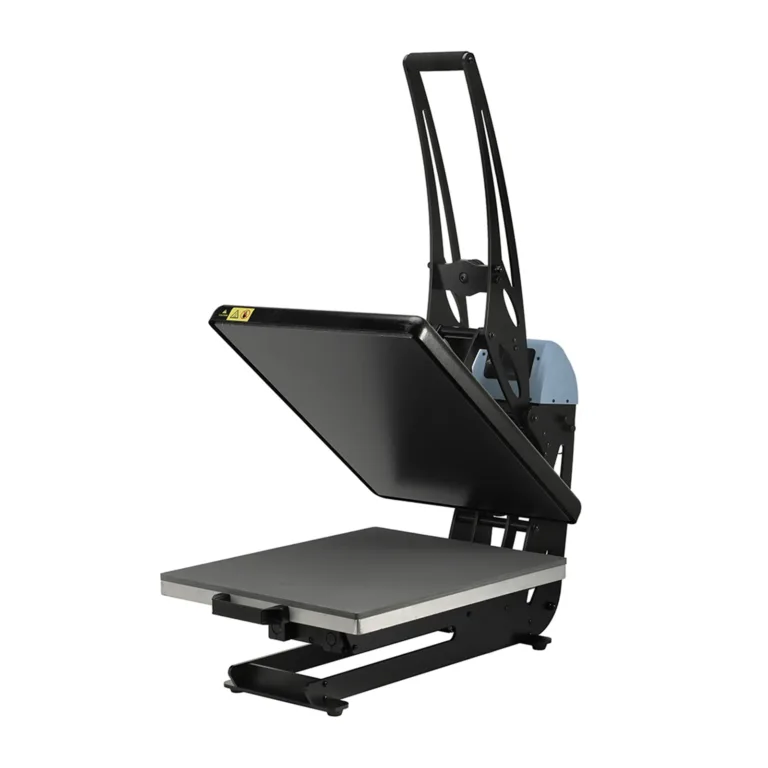
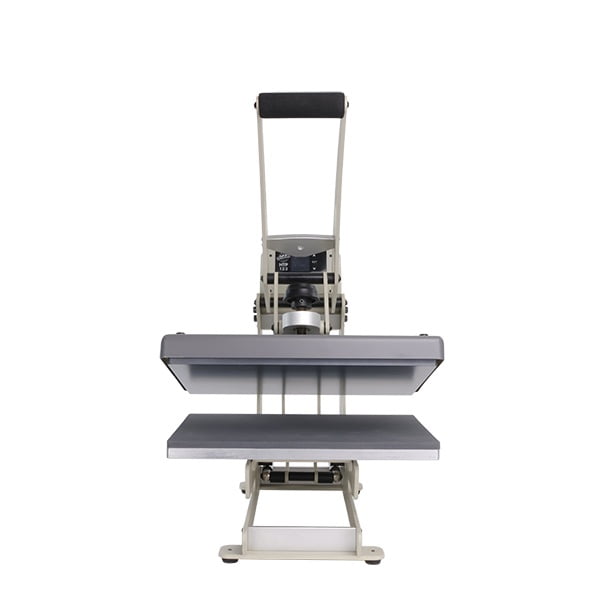
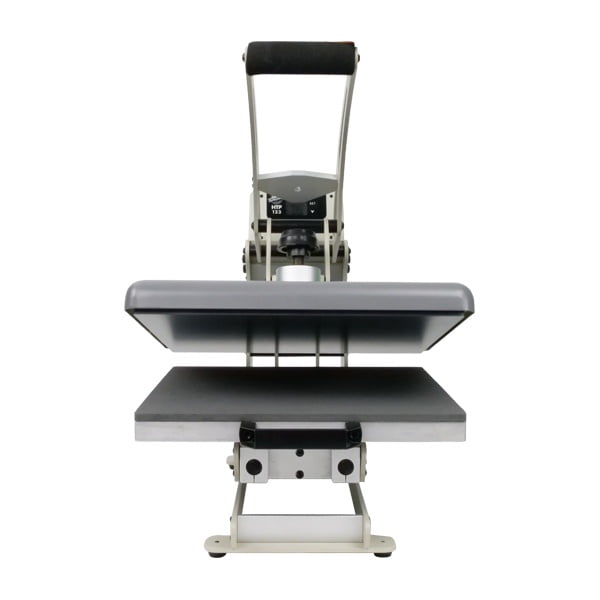
All clamshell Heat Presses
Recommended Operating Parameters
| Factor | Ideal Range | Risk of Being Too High | Risk of Being Too Low |
| Relative Humidity | 35% – 60% | Media curling, slow drying, clumping powder. | Static buildup, ink misting, nozzle drying. |
| Temperature | 15°C – 25°C | Ink thinning, printer overheating. | Increased ink viscosity, head clogs. |
Frequently Asked Questions
How does humidity affect transfer paper?
High humidity causes transfer paper to absorb moisture, which can lead to paper jams, ink bleeding, and the paper curling (cockling). Low humidity can create static electricity, which affects ink placement and attracts dust to the media.
What is the best way to monitor environmental factors in a print shop?
The most effective way is to use a digital hygrometer and thermometer placed near your printer. This allows you to track real-time changes and use humidifiers or air conditioning to stay within the recommended 35-60% humidity and 15-25°C temperature range.
Can I store my transfer media in a garage or warehouse?
It is not recommended unless the space is climate-controlled. Extreme temperature swings and high humidity in non-insulated spaces can permanently damage the chemical coatings on transfer papers and films, making them unusable.
 4.8
4.8